Grocery Shrink Is Everywhere. Detecting It Doesn't Have to Disrupt Everyone Else.
Published
Tags
Post

By: Adam Cichy
Shrink is having a moment. Not because it is new, but because it is showing up in more places, more often, with more scrutiny attached to it.
For grocery operators, that scrutiny creates a familiar trap: when loss goes up, the reflex is to tighten the store. More checks. More gates. More “prove you paid.” More friction in the name of control.
It works sometimes, in the bluntest sense. It also punishes the wrong people.
Most shoppers are honest. They should not feel like suspects because a small percentage of sessions go sideways. The goal is not to make shrink visible to everyone. The goal is to make it precise for the people who can actually do something about it, and invisible to everyone else.
That is the difference between old loss prevention and modern shrink management. Shrink isn’t one thing, so it cannot have one solution.
“Shrink” gets used like it is a single problem with a single cause. In practice, it is a bundle of very different failure modes, and each one requires a different response.
Here are four common categories that tend to get lumped together:
True theft: intentional non-payment, concealment, handoffs, organized patterns.
Process leakage: mis-scans, missed items, incorrect weights, edge cases in checkout flow.
Misattribution and disputes: the shopper did pay, but the system cannot confidently reconcile the session, so it becomes a chargeback or dispute.
Operational errors: restocking mistakes, mislabels, damaged goods, inventory inaccuracies, wrong item mapping.
Treating all of these as “theft” leads to the same outcome: more friction, more shopper frustration, and a team that spends time investigating the wrong things.
Treating them as distinct categories leads to a better question: Which type of shrink is increasing, and what is the least disruptive way to address it?
High-friction LP playbooks hurt conversion, not just bad actors
Traditional loss prevention was built for a world where detection was reactive and evidence was scarce. So the playbook became physical and visible:
stop-and-check interventions
exit gates and aggressive monitoring
confrontations that escalate quickly
broad policies that slow everyone down
The problem is that these tactics do not just deter bad behavior. They change the experience for everyone. In grocery, that matters more than most categories.
People are time-sensitive. Many purchases are habitual. If a store feels slower or more adversarial, shoppers do not debate it. They simply change stores.
Modern shrink strategy needs a different operating principle:
Increase precision, decrease disruption.
That means shifting from “treat every session as risky” to “identify the small number of sessions that truly are.”
You cannot understand shrink if you only look at the moment of payment
Shrink is rarely a single moment. It is a sequence.
A handoff does not happen at the door. A concealment pattern starts earlier. An “exit anomaly” is usually the final signal, not the first. Even many disputes trace back to a mismatch in how a session was interpreted across the visit. That is why the most valuable signal is the full shopper journey.
When you can observe the whole visit, you can detect patterns that are otherwise invisible:
handoffs that happen in low-visibility zones
concealment behaviors that repeat across store layouts
item interactions that do not match what exits the space
anomalies in exit behavior that correlate with unpaid outcomes
repeated edge cases that drive misattribution and disputes
This is the operational advantage of continuous journey understanding. Shrink becomes clearer when you can see how the session unfolded.
The most scalable approach is exceptions management
The store does not need 100% of visits reviewed. It needs the right visits reviewed. A modern shrink workflow should look less like constant monitoring and more like exceptions management:
Flag a small percentage of sessions with the highest loss likelihood
Attach reviewable evidence so a human can quickly validate what happened
Route the right response depending on the shrink type
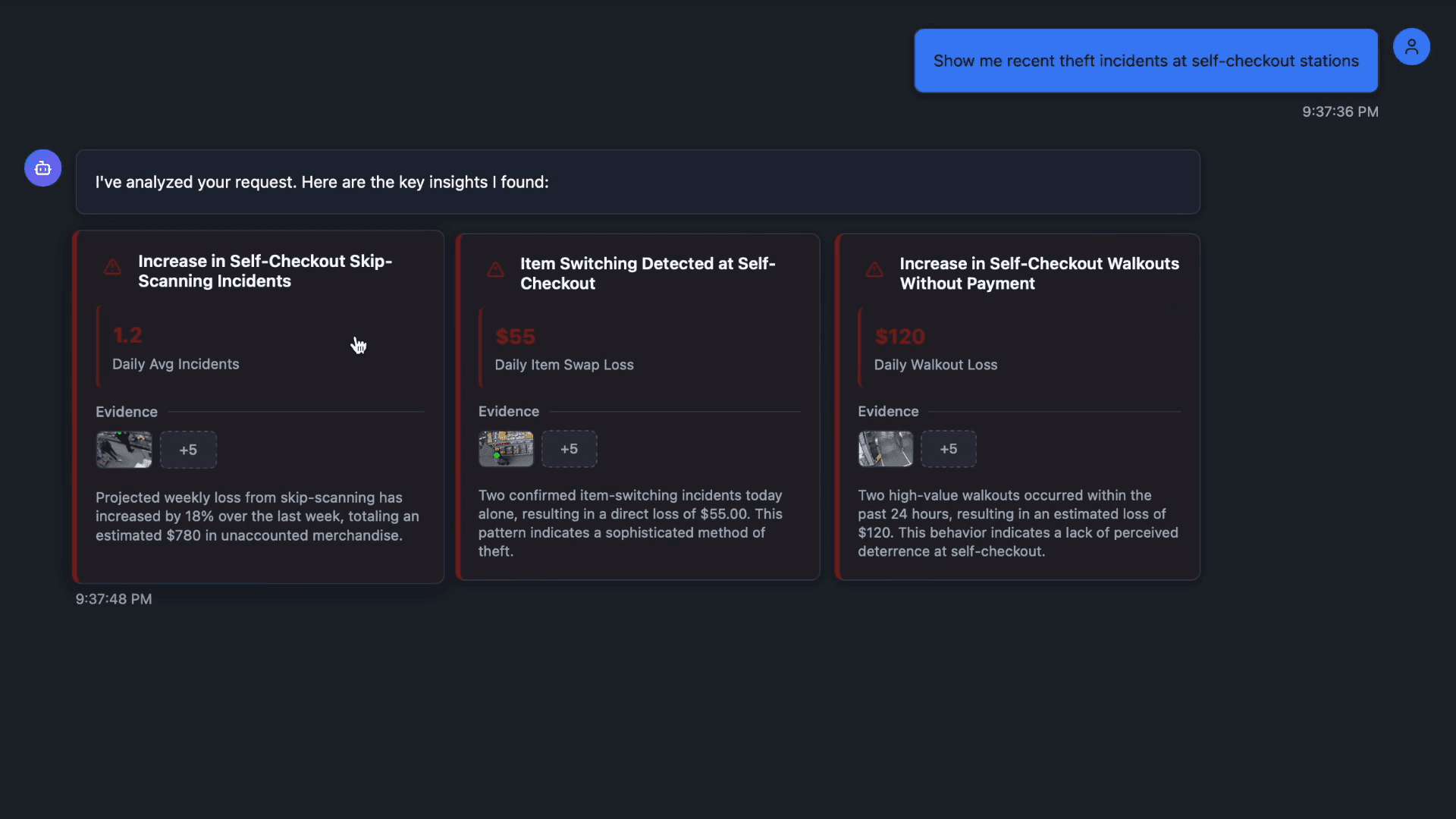
That evidence should make review faster. Think:
timestamp
store zone and path context
items involved
short video snippets relevant to the anomaly
a clear reason the session was flagged
When exceptions are precise, analysts stop chasing noise. Teams spend time where it matters. Honest shoppers stay out of it entirely.
The promise: reduce loss and disputes without breaking the experience
Shrink reduction is often framed as a tradeoff: reduce loss or protect NPS. Increase control or keep conversion. That is a false choice when detection is precise.
The better goal is:
lower the unpaid rate
reduce false disputes and misattribution
maintain (or improve) NPS and conversion by keeping interventions rare and justified
That only happens when detection is accurate enough that the store does not have to “turn up the volume” on everyone.
The metrics that tell you if you’re doing it right
Shrink programs fail quietly when they cannot be measured beyond “we feel like it is better.” The moment you move to exceptions management, you can instrument the system like an operation.
Here are five metrics that anchor whether you are reducing loss without adding friction:
Unpaid rate
Incidents per 1,000 visits
Analyst minutes per incident
False positive rate
Dispute resolution time
Those numbers tell you what matters:
Are we flagging the right sessions?
Are we wasting human review time?
Are we escalating the wrong cases?
Are we improving outcomes without changing the experience for everyone else?
Shrink is everywhere. It does not need to be everyone’s problem.
Grocery shrink will not be solved by making stores feel tighter. It will be solved by making detection smarter and quieter.
Precision changes the equation. When you can understand the whole shopper journey and focus human effort on a small set of high-confidence exceptions, you reduce loss while protecting the thing that makes grocery work in the first place: an experience people trust enough to repeat weekly.
If you want to explore what exceptions-based shrink management can look like in your stores, we’d love to connect.
Talk with our team about spatial intelligence for grocery operations.