Spatial Identity: The Missing Layer Between Access Control and Guest Experience
Published
Tags
Post
Post By: Sebastian Herforth
Title Image Credit: Paravision & Bsquared
For the past two decades, venues have treated security and hospitality as separate disciplines. Access control vendors manage credentials. Hospitality platforms manage loyalty and service. Each does its job well. But neither sees what actually happens in between.
That blind spot is the physical journey.
Badge readers, ticket scanners, and biometric gates answer a single question: authorized or not. Once someone crosses the threshold, the system goes quiet. It doesn’t understand where that person goes next, how long they wait, what they engage with, or whether their visit unfolds smoothly or falls apart.
On the other side, guest experience tools promise personalization. But most rely on apps or self-identification. If a guest doesn’t open their phone or scan again, every interaction resets to zero. Staff members are left guessing. Service becomes reactive.
Spatial Identity addresses this disconnect.
At its core, Spatial Identity is the continuity of an anonymized behavioral thread across a physical space. It follows a guest from entry through each zone they visit, maintaining awareness of movement patterns, dwell, congestion, and interaction moments. When a guest opts in through ticketing, loyalty, or biometric systems, that behavioral thread can connect to a known identity. The result is recognition that persists, not just at the gate, but throughout the visit.
This is already being deployed in environments where identity and throughput matter at the same time.
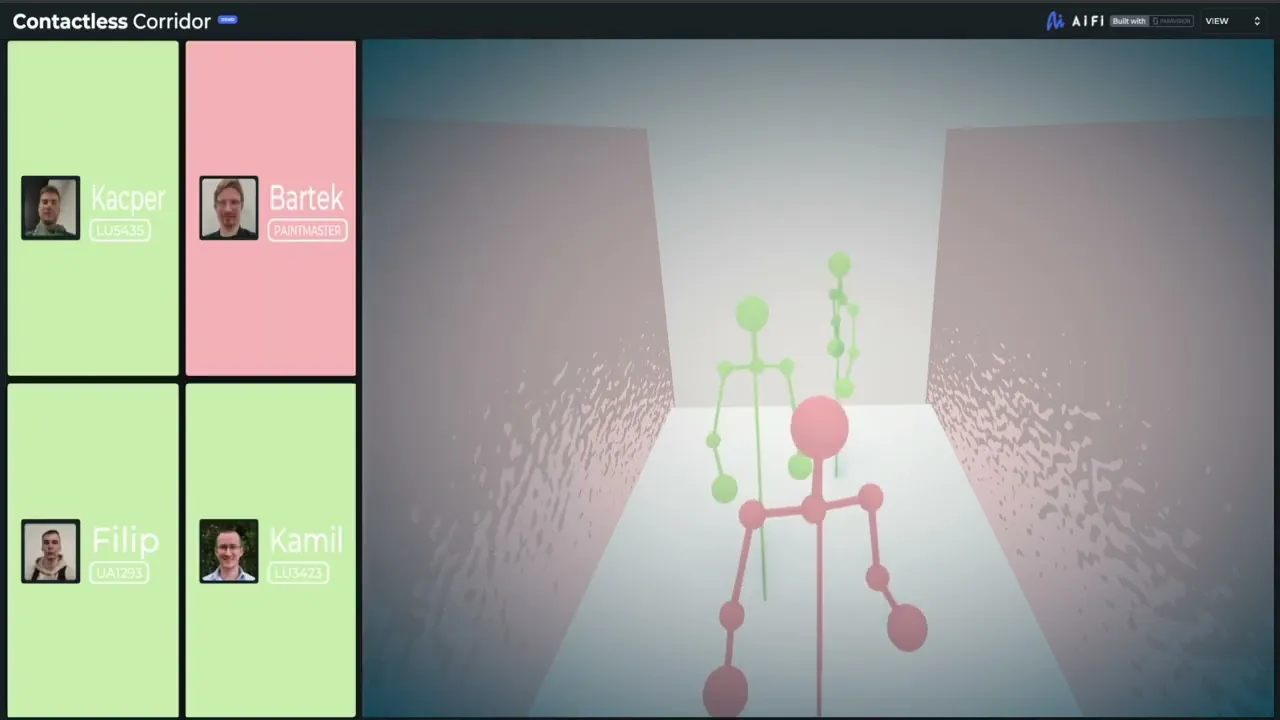
Take the emergence of contactless entry corridors in high-flow environments like airports and large venues. In a recent collaboration between AiFi and Paravision, a “Contactless Corridor” combines facial recognition with continuous spatial tracking to identify individuals while they are in motion, without requiring them to stop, scan, or present credentials. Instead of discrete checkpoints, identity is resolved continuously across the entire corridor, with awareness of where someone is, how they are moving, and whether they require attention.
The operational implications are significant. Security teams are no longer limited to a single moment of verification. They can maintain visibility across the full journey, distinguishing between known individuals, unknowns, and those who require intervention, all while reducing bottlenecks and cognitive load for staff.
The same underlying capability is beginning to reshape guest experience as well.
At Intuit Dome in Los Angeles, the Parallel Reality™ display developed by our partners Misapplied Sciences, along with AiFi's 3D tracking demonstrates what happens when identity persists beyond entry. As fans walk through the concourse, a single shared display can present personalized messages to dozens of individuals at once. One fan might see a welcome message and directions to their seat, while another sees a prompt to visit a nearby store or a tailored brand experience. Each message is visible only to the intended viewer, even though they are all looking at the same screen.
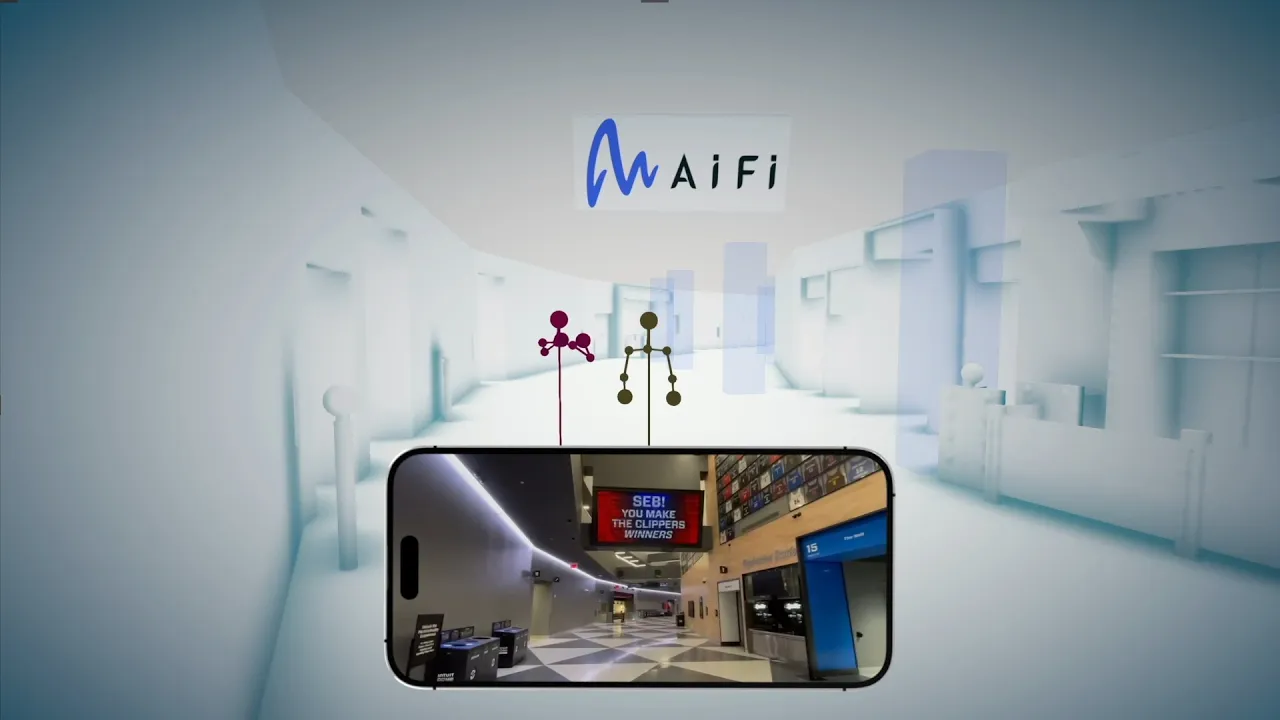
What enables this is both the display as well as its ability to maintain identity and position continuously as people move through space, which is made possible through AiFi’s technology. The system understands not just who someone is, but where they are, where they are headed, and what is relevant in that moment.
It creates a personalized experience without requiring an app, and it adapts in real time without interrupting the flow of the visit.
A seasoned restaurant host can recognize fifty regulars and anticipate their preferences. Now imagine that quality of awareness extended to thousands of guests during a single event. A returning visitor can be routed through an express lane automatically. A concessions worker can greet someone by name and suggest their usual order. A premium guest can be elevated to the appropriate service tier without stopping to explain who they are.
The same continuity strengthens security. Behavioral anomalies become visible across an entire visit, not just at entry or exit. Complaints can be mapped to wait times, congestion, and specific service breakdowns. Incidents can be detected faster, with fewer false positives, because context travels with the individual.
This layer doesn’t exist in traditional access control systems from providers like Genetec or LenelS2, which are built around credentials. Nor does it live in hospitality platforms that operate primarily through mobile apps. Spatial Identity operates between them, grounded in real-world behavior.
It is already operating in environments where identity confusion is costly: secure corridors, premium venues, and high-throughput public spaces. As demand increases in stadiums, airports, and transit hubs, the limitations of checkpoint-based identity become harder to ignore. Those systems were never designed to resolve identity continuously across space.
When access and experience operate from a shared behavioral layer, the business impact becomes measurable. Entry processing time drops. Queue abandonment declines. Time from entry to first purchase shortens. In-venue spend rises with smoother arrival. Incident detection latency improves. Loyalty programs built on actual behavior outperform those built on surveys.
Most importantly, guests feel known without having to do anything to be recognized.
That is the promise of Spatial Identity: security and hospitality operating from the same understanding of the physical world.